

Main Idea: The all-knowing God can throw down any adversary that opposes Him and can decree their downfall in advance.
A Look at the Text:
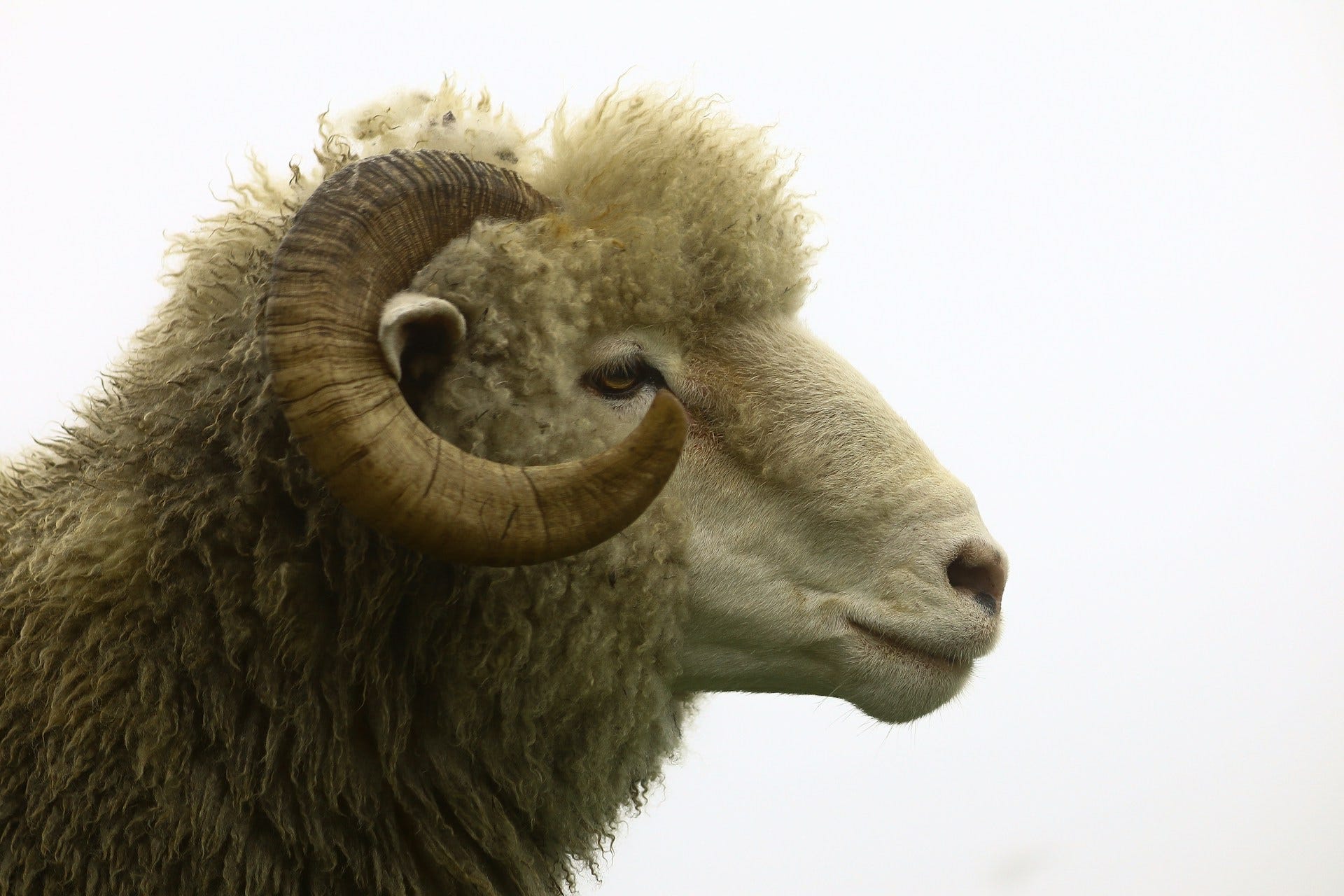
Two years after his vision of the four beasts, Daniel had another vision, still during the time of Belshazzar. Daniel’s vision transported him to Susa, one of the great cities of Persia (Dan. 8:2). There, he saw a ram on the banks of a canal, a powerful two-horned ram that couldn’t be stopped and who did as he pleased (Dan. 8:3-5).
But then suddenly, a goat with a single horn appeared from the west who trampled the ram, and none could rescue the great ram from the goat’s power (Dan. 8:5-8). Yet the goat was not indestructible. For when it was strong, its horn broke and was replaced by four horns (Dan. 8:8).
From that horn came another horn, a little horn, that became great, expanding to both the south and east, even to the land of Judah (Dan. 8:9). In the land, it would go on to trample the sanctuary (Dan. 8:11-14).
Once more, Daniel was perplexed, and the angel Gabriel made it known to him that this was a vision for the time of the end (Dan. 8:17). Then, the angel proceeded to clarify this vision in greater detail than any previous ones.
The ram was the Medo-Persian empire, the two horns representing its two kings (Dan. 8:20). The goat was the king of Greece, Alexander the Great, who would eventually defeat them (Dan. 8:21). This took place during the intertestamental period between 334 and 331 B.C.
When Alexander’s horn was broken, it would be replaced by four horns, the four generals who received his kingdom. The little horn would then be the infamous Antiochus Epiphanes, who would eventually inherit the portion of the kingdom that went to Alexander’s general, Seleucus.
One scholar has described his actions in this way:
Antiochus tries to force Hellenism (the Greek way of life) on the Jews. He does so with immense cruelty, including torture and bloodshed. He desecrates the temple with pagan sacrifices and a statue of Zeus.[1]
Yet he would later be broken, and by no human hand (Dan. 8:25). History would later reveal that he would die of illness.[2] Despite this assurance, the vision of the ram and the goat greatly troubled Daniel as he struggled to fully understand it (Dan. 8:27).
Bringing it Home:
The Bible presents a God who is outside of time. A God who is both Alpha and Omega, a God who is and who was and who is yet to come—the Almighty (Rev. 1:8). He is a God who knows the future as if it were the past.
Some people in the modern age struggle to believe the book of Daniel preceded the time of Antiochus because it accurately predicted things to come. In their eyes, no one living during the last days of Babylon as Daniel was would have predicted the fall of the Persian empire before its zenith, let alone that their conqueror, a Greek king, would have his empire split into four.
Yet this is no problem for the God presented in the Bible. A God who knows the future is certainly not incapable of communicating the future as He did to Daniel. Even more, it is certainly within His power to bring about the downfall of any who stand opposed to Him.
As believers today, Antiochus stands as a prelude to the great antagonist, the beast, who is yet to come and will likewise be thrown down. Yet we can rest assured that God has already revealed that day when the dragon, the beast, and the false prophet will all be thrown into the lake of fire (Rev. 20:10). In the end, all opposition to the living God and His people will be vanquished, and we can trust that His Word will come to pass.
Challenge:
Do I judge God’s capabilities based upon my human limitations and knowledge?
[1] Andrew Knowles, The Bible Guide, 1st Augsburg books ed. (Minneapolis, MN: Augsburg, 2001), 349.
[2] John H. Walton, Zondervan Illustrated Bible Backgrounds Commentary (Old Testament): Isaiah, Jeremiah, Lamentations, Ezekiel, Daniel, vol. 4 (Grand Rapids, MI: Zondervan, 2009), 556.
We’re starting Daniel in our Bible study in a couple of weeks. Looking forward to it.